In modern manufacturing, productivity is no longer measured by the number of identical parts you produce — but by how quickly you can adapt to change.
Across industries, from precision mechanics to consumer goods, production models are shifting.
Customers are demanding customization, shorter delivery times, and frequent product updates.
As a result, many manufacturers are moving from mass production to small-batch and high-mix production, where efficiency and flexibility must coexist.
The new manufacturing landscape
Producing in small batches means dealing with:
- multiple product variants and part geometries,
- frequent changeovers,
- tighter deadlines and higher quality expectations,
- increasing pressure to reduce waste and downtime.
Traditional automation, optimized for long runs and repetitive cycles, struggles to keep pace.
Every product change often means mechanical retooling, manual setup adjustments, and calibration downtime — operations that slow down production and inflate costs.
Discover our applications in this dedicated playlist.
When flexibility meets precision
In precision industries — such as electronics, automotive, and medical devices — every batch matters.
Being able to run a short series for testing or prototyping with the same efficiency as a large one is now a strategic advantage.
Flexible systems ensure that the production line remains stable, repeatable, and scalable, no matter the batch size.
That’s why small-batch manufacturing isn’t a limitation anymore: it’s a path toward more responsive, sustainable, and intelligent production.
The mindset shift
Moving to flexible automation requires a change in mindset:
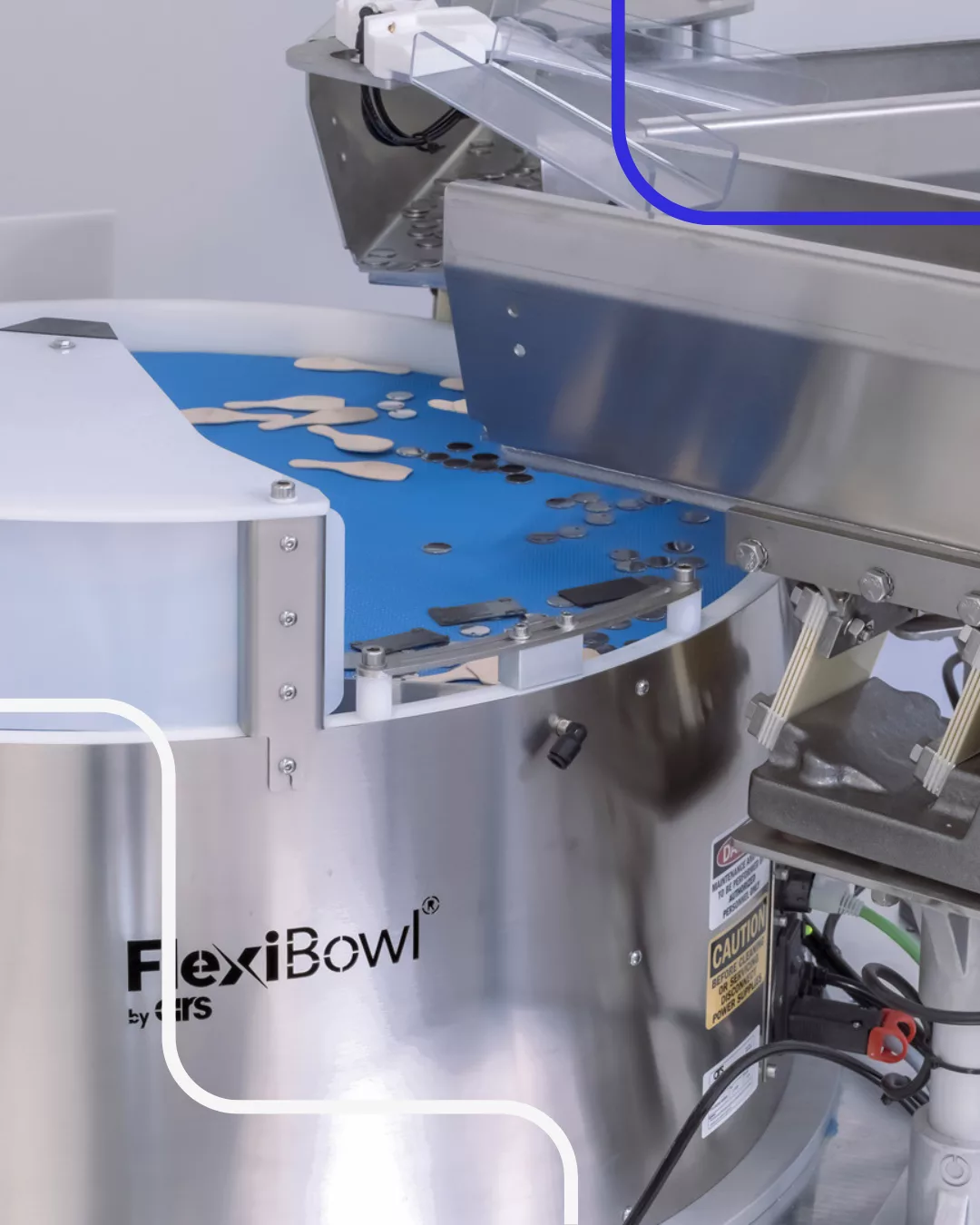
from thinking about machines as static systems to viewing them as adaptive platforms that evolve with your business needs.
It’s not just about feeding parts — it’s about designing processes that thrive on variability.
Because in the era of small batches, the strongest competitive advantage is not volume — it’s agility.
💬 How is your company adapting to small-batch production? What are the main challenges you face when handling frequent format changes?